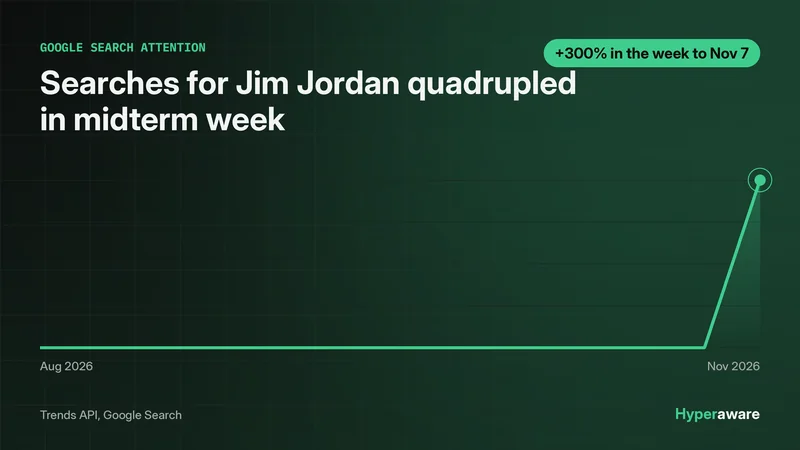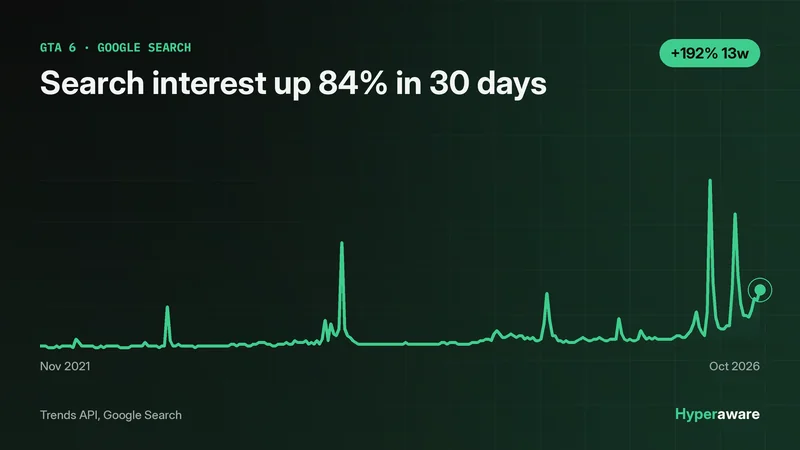
By 2 a.m. Eastern on Saturday, "The FAA" sat at No. 11 on X's trending list and #faagroundstop at No. 14, while Forbes's headline on the lifted stop was the seventh item in Google News top news. The attention followed a Friday afternoon when the FAA grounded every U.S. departure for about four hours, after radar and communications systems suffered intermittent outages at air traffic control centers. The stop was lifted Friday evening. Aviation analytics firm Cirium counted 31.45% of Friday's scheduled U.S. departures as canceled or never flown, and Transportation Secretary Sean Duffy blamed switches, routers and copper lines from the 1980s.
Attention stayed high hours after the lift
The boards were pulled at 07:01 UTC on Saturday, Nov. 14, hours after the stop was lifted Friday evening, and the two FAA terms were still there. On X's trending board, "The FAA" and "#faagroundstop" were the only aviation terms in the top 15, sitting among sports terms such as Brook Lopez, Draymond and the Knicks. In Google News top news, the Forbes headline on the lifted stop ranked No. 7, above the announcement of a Trump trilateral meeting with Putin and Xi at No. 11. One Trends API news cluster counted 12 outlets carrying the story, among them CBS News, NBC News and Al Jazeera.
The stop lasted about four hours
The FAA said the problem affected Air Route Traffic Control Centers, the regional centers that handle high-altitude traffic, NPR reports. Duffy said at a Friday night briefing that the centers had suffered intermittent outages of their radar and communications systems beginning earlier in the afternoon. The stop lasted about four hours, NPR reports. As of 9 p.m. ET, more than 8,000 flights had been delayed Friday and 7,000 canceled in the U.S., according to FlightAware, cited by NPR. The turmoil came on the heels of nearly 7,000 flight delays on Thursday, which suggests the system was already strained before the stop began.
A third of Friday's departures never flew
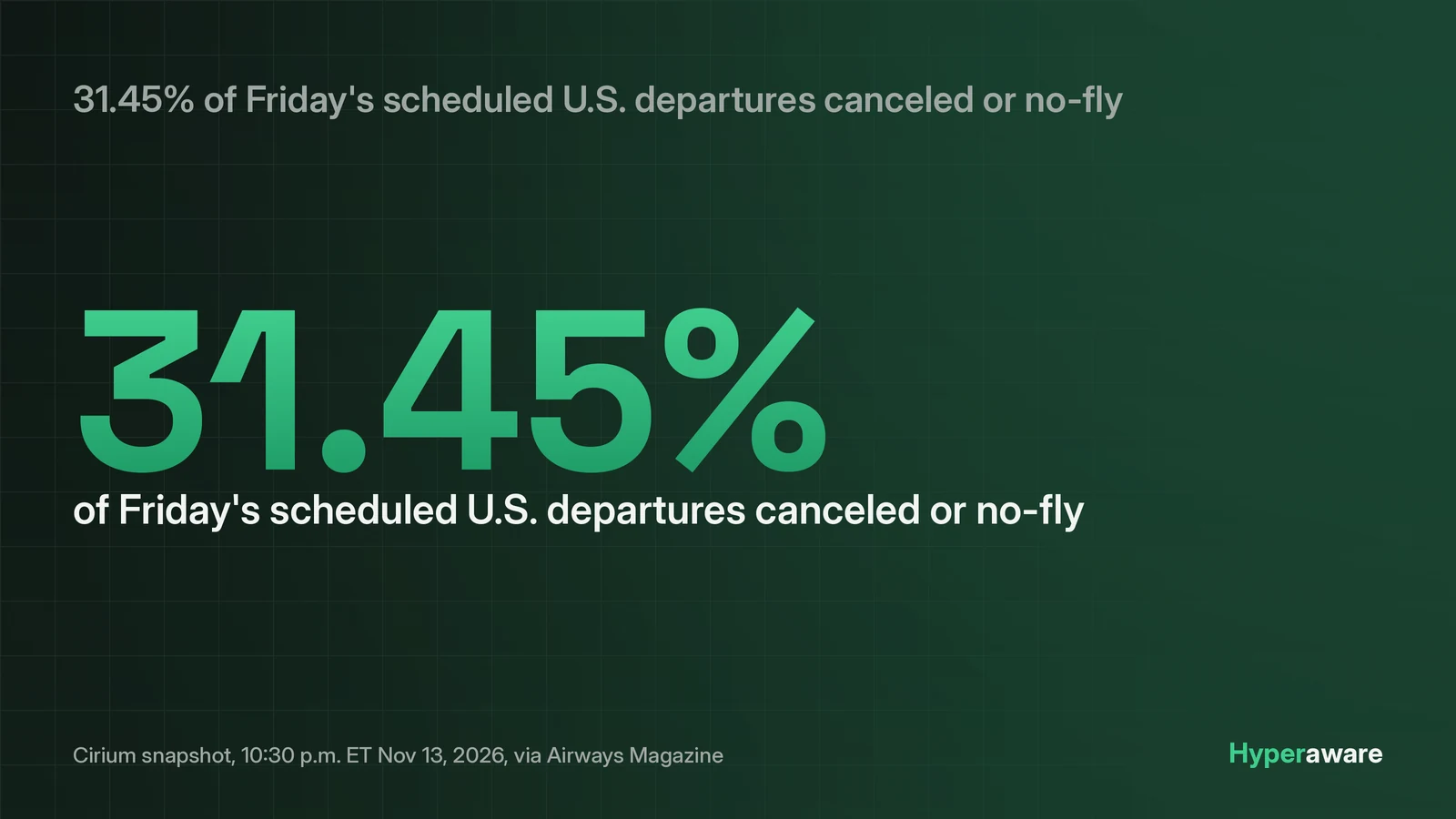
31.45% of Friday's scheduled U.S. departures were canceled or never flew: 8,267 of 26,284, Airways Magazine reports from Cirium's 10:30 p.m. ET update. Saturday already showed disruption too: 1,201 of 22,232 scheduled departures, 5.40%, sat in the same combined category.
| Day | Scheduled U.S. departures | Canceled or no fly | Share |
|---|---|---|---|
| Friday, Nov. 13 | 26,284 | 8,267 | 31.45% |
| Saturday, Nov. 14 | 22,232 | 1,201 | 5.40% |
LaGuardia was the worst-hit large airport in the snapshot, Airways Magazine reports, with 232 of 533 scheduled departures canceled or never flown, 43.53%. Chicago O'Hare had 433 of 1,293 in the category, 33.49%, and Atlanta 372 of 1,130, 32.92%. Cirium also reported 893 diverted flights, of which 722, or 80.9%, returned to their origin airport.
The figures need their caveat. Cirium's "no fly" label covers a scheduled flight that had not departed within 180 minutes of its scheduled departure time, and the combined figures are not cancellations alone: earlier cancellations unrelated to the ground stop, including weather disruptions, may be included. Cirium also said it did not yet have data on flights that operated after the stop was lifted, so the snapshot does not establish how many services resumed Friday night.
Duffy blamed old switches and 1980s copper lines
Duffy blamed outdated technology for the failure, saying the system runs on old switches, old routers and 1980s copper lines, NPR reports. He said the old system went down everywhere and got overloaded. At the same briefing he said fixes had been deployed to reduce the overloading on the switches, and that newer equipment had not suffered the same failure, Airways Magazine reports. When reporters pressed him on why those systems would become overwhelmed on an otherwise normal travel day, Duffy did not have a ready answer, NPR reports.
Duffy also used the briefing to ask for money: $50 billion in emergency funding from Congress for the air traffic control overhaul, Airways Magazine reports. In September he had outlined plans to seek another $30 billion for air traffic control and airport modernization.
No evidence of a cyberattack, but nothing ruled out
Homeland Security Secretary Markwayne Mullin joined Duffy at the briefing and said officials had seen no evidence the issue was due to an attack, NPR reports. Airways Magazine reports Mullin added that officials had found no indications of a cyberattack so far but had not ruled one out, saying the investigation continued and nothing had been ruled out.
One theory was shut down fast. The FAA recently began rolling out SMART, an AI-supported traffic-planning system, and announced its nationwide expansion three days before the stop. Air Space Intelligence, the company behind SMART, said the ground stop was not based on or a result of its system, NPR reports. Senator Richard Blumenthal called late Friday for a prompt, penetrating investigation into the causes, NPR reports.
NPR calls this only the second nationwide ground stop since September 11, 2001. The last one came in January 2023, when a NOTAM system outage shut down all U.S. airports; the FAA later determined contract workers had inadvertently deleted critical files.
What to watch next
Whether individual flights could depart Friday night depended on pilot and flight attendant availability, Duffy said, urging passengers to check with their airlines, Airways Magazine reports. He said it would take some time to unwind what happened that afternoon. Saturday's schedule already carried 1,201 canceled or no-fly departures in Cirium's snapshot, so the disruption runs past the lift. The investigation continues and officials have not established a cause: Duffy's explanation was a preliminary assessment, not a completed investigation, Airways Magazine reports. The $50 billion ask now sits with Congress.