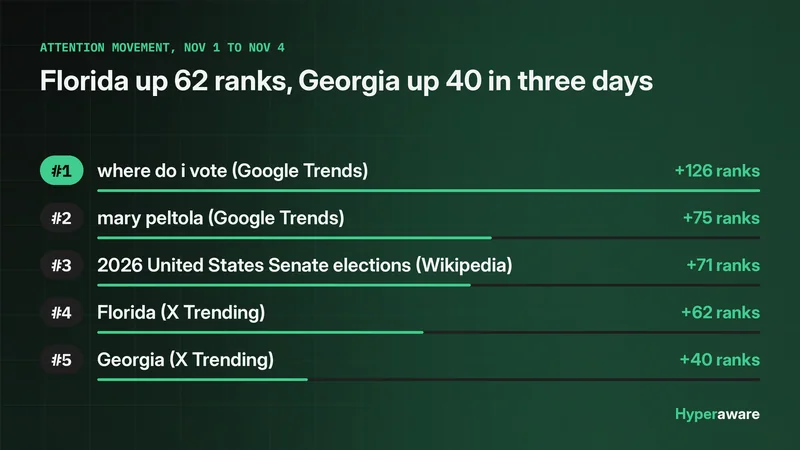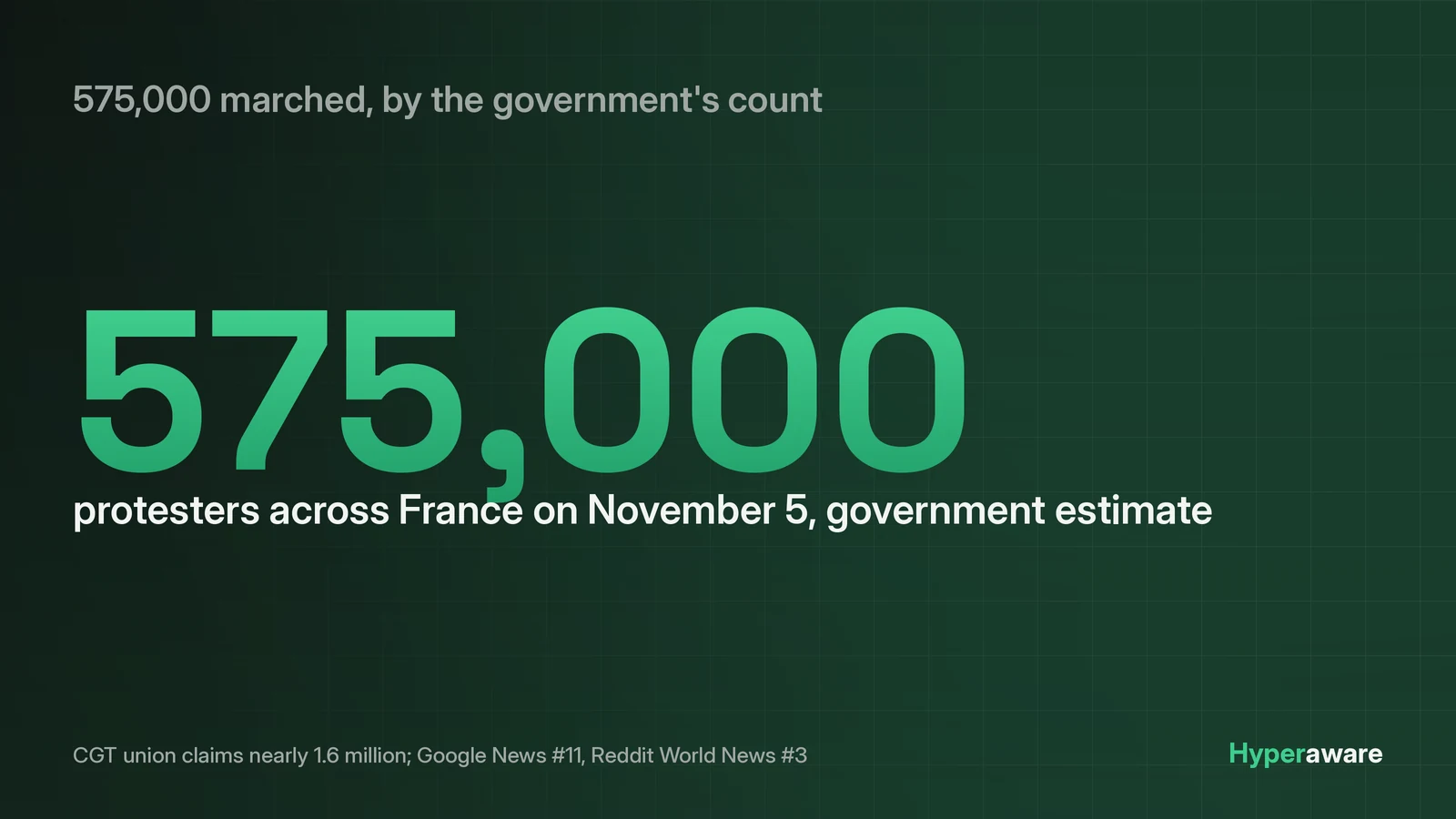
About 575,000 people marched across France on Thursday, November 5, the biggest single day of protests since the unrest began in September, according to government estimates, while the CGT union claims nearly 1.6 million took part. By 07:01 UTC this morning the marches ranked 11th on Google News Top News and 3rd on Reddit World News. The boards the public fills itself tell a different story: Google's search snapshot is from November 4, before the marches happened; X is full of Thursday night football; Wikipedia's trending list is still counting US election winners. The front pages have moved on. Search and social have not.
Search and social are a day behind the front pages
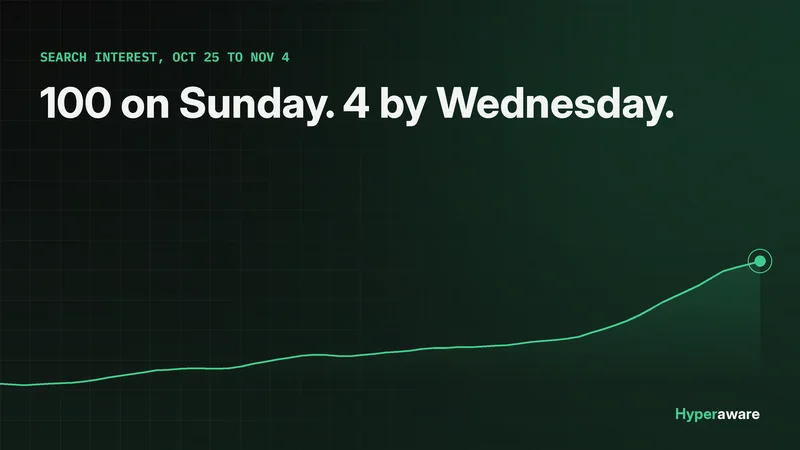
At 07:01 UTC, Google News Top News puts the CNN report on the French marches at number 11, in a top ten dominated by US midterm aftermath. Reddit's World News board ranks the same story higher, at number 3, under the headline about mass protests sweeping France. Neither placement shows up in the boards the public fills itself. Google Trends' latest snapshot dates from 07:01 UTC on November 4, a day before the marches, and its 25 rows are all election terms, sport, or weather, with no France term among them. X's top 15 this morning is all Ravens and Jaguars, and Wikipedia's trending list runs through election winners and candidates, again with no France term. The search time series for "france strikes" is just as stale, its latest point October 31, so no growth figure exists yet for the spike. That lag fits what this site's fastest-risers report found: attention arrives after the surprise, not with it. This time the surprise came from the streets rather than the ballot box. Anyone searching for the story today meets the front pages first.
Thursday was the largest turnout of a two-month movement
The Interior Ministry counted about 575,000 demonstrators nationwide, revised down from an earlier estimate of 600,000, including about 60,000 in Paris, France 24 reports, citing official figures. The CGT, one of France's largest unions, put the total at nearly 1.6 million, including about 350,000 in Paris. The gap between the two counts is normal for France, and both agree on the direction: Thursday beat the 550,000 the ministry counted on October 17, the previous peak, and the 410,000 on October 24. Rallies and marches took place across France, with large protests in Paris, Marseille, Bordeaux and Lille, and 70,000 police officers and gendarmes were deployed. The day passed relatively peacefully, CNN reports, with localized clashes in several cities. Police detained 448 people, 53 officers were injured, and firefighters responded to 86 fires across the country, the Interior Ministry said. In Lyon, police fired tear gas and charged a group of protesters, CNN reports. Near Toulouse, a school was badly damaged by a deliberate act of arson, according to Education Minister Edouard Geffray. The strikes reached deep into public services: about one in three higher education institutions were disrupted, about 13% of all school staff went on strike, and about 5% of hospital staff, with no significant disruption to healthcare, the health ministry told CNN. An estimated 9.89% of state civil servants took part in the strikes, the BBC reports.
Wages, pensions, and classrooms are three separate fights
Each group in the streets has its own demand, and the movement holds together on a shared complaint about the cost of living. The labour unions that called the strike want higher wages and pensions. The CGT says the minimum wage must rise immediately by 10%, from the current Smic of 12.31 euros an hour, the BBC reports, while the CFDT, France's largest union confederation, is seeking a net increase of 100 euros a month for workers. Student groups want an increase of more than $10 billion in the education budget, plus a $1.5 billion investment in school infrastructure and 250,000 additional university places. The Gilets Jaunes, or Yellow Vests, want the departure of President Emmanuel Macron and his government, and a new constitutional process. The movement began in September, when high school students took to the streets over poor conditions and a lack of resources in education, the BBC reports, and it has since drawn in trade unions, pensioners, and the Yellow Vests. "Everything is going up except wages and pensions," the main unions said in a joint statement, according to NBC News. The October 17 marches turned violent, with more than 2,000 stores looted and historic buildings set on fire, which is why Thursday's relatively peaceful day matters as a measure of where the movement stands.
The government answers on Monday; the streets answer first
Prime Minister Sebastien Lecornu said he would convene a social conference with unions and employers on Monday, November 9, to discuss purchasing power and wages, the BBC reports. Macron told French journalist and YouTuber HugoDecrypte that young people have been heard, and called for high schools to reopen after the holiday and for calm to be restored, even as the protests continue. CNN notes he has also been criticized for failing to respond adequately to the demands. The protests are not stopping for the conference. The Yellow Vests have called for further blockades and protests on Friday and Saturday, and protesters say they will keep demonstrating until Christmas, and possibly until France's presidential election next spring, CNN reports. Similar protest movements have emerged elsewhere in Europe, with strikes planned later in November in Spain, Italy, Portugal, and Belgium, CNN reports. For now the attention gap is the tell. The front pages rank France's biggest protest day since September among the morning's top stories; the search and social boards will show whether the public catches up by the weekend, or whether the story stays a front-page story.