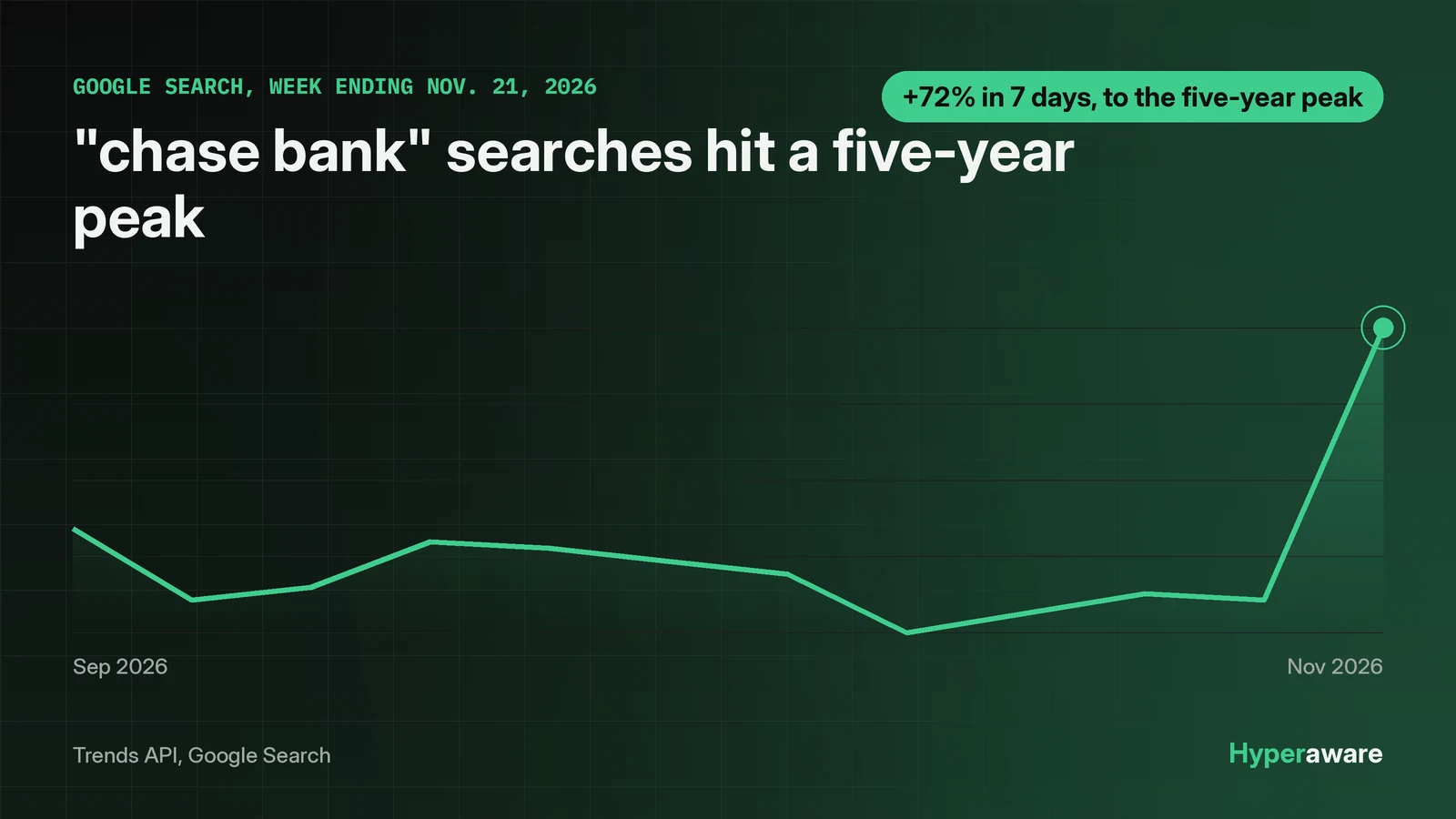
On November 19, JPMorgan Chase said a cyberattack on third-party vendors may have exposed customer names and email addresses held by those vendors. The bank said its own systems were not hit, its services were not disrupted, and the incident is unrelated to the outage that affected Chase customers earlier the same week, BleepingComputer reported. Visa and Mastercard confirmed separate vendor incidents as well. The search data shows why the two Chase stories blurred together: "chase bank" ranked 6th on Google Trends on November 23, "bank outage" ranked 19th, and weekly search interest in "chase bank" hit its five-year peak in the week ending November 21.
The disclosure came three days after the stolen data surfaced
The extortion group n0n claimed responsibility for an attack on Qubole, a cloud data analytics company, on November 11, BleepingComputer reported. The group then posted data it claimed to have stolen on its extortion site on November 16. Chase disclosed the incident on November 19, in a statement posted on X. The disclosure came from the largest U.S. bank by assets, about $4.1 trillion as of June 2026, with about 78 million active digital customers, BleepingComputer reported.
The statement said the firm had learned that third parties who provide services to it were the target of a cyber attack, BleepingComputer reported. The bank said that, based on its investigation so far, it believes the attackers accessed certain marketing data held by those vendors, which may include some customer names and email addresses.
Researchers at Wiz, working with Sentra and Mandiant, traced the intrusion to October 14 through 26, when the attackers used compromised Qubole credentials to reach customers' cloud environments through access roles those customers had granted the vendor, CyberInsider reported. BleepingComputer reported the group claimed to have stolen 53.9 GB across 30,743 files directly from Qubole, and claimed to hold nearly a petabyte of data from Qubole customer networks, a figure that remains unverified. Qubole is a cloud data analytics company owned by Idera, BleepingComputer reported.
The board mixed two Chase stories the bank calls separate
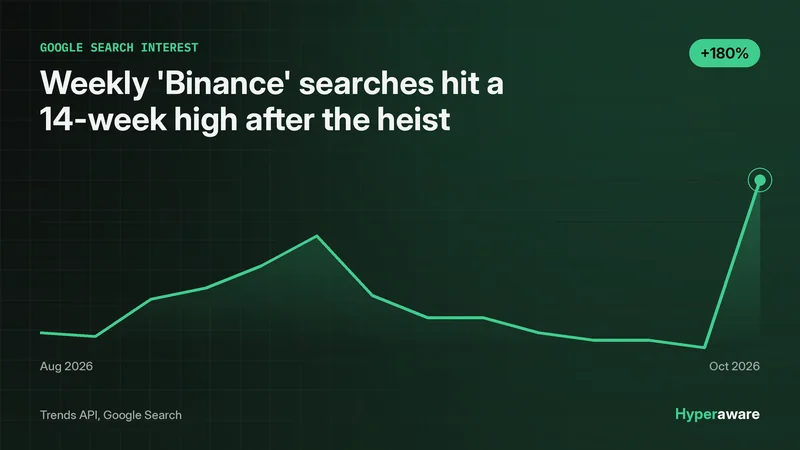
The confusion is visible in the search data. On November 23, "chase bank" ranked 6th on the Google Trends board and "bank outage" ranked 19th, with "gta 6 reviews" at No. 1. Weekly search interest in "chase bank" rose from 58 in the week ending November 14 to 100 in the week ending November 21, a 72% rise, and 100 is the highest value in the five-year weekly series. The eleven weeks before that ranged from 53 to 69. Search interest in "bank outage" rose far faster from a lower base, up 1,011% in seven days, from 9 to 100.
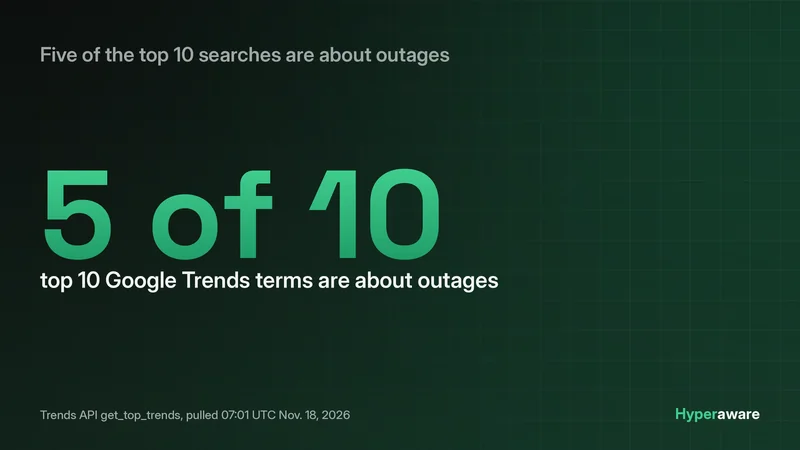
The two terms describe two different incidents for the bank. On November 16, a software bug disrupted Chase online services, and USA Today reported that Chase told it shortly after 7 p.m. ET that transactions were being processed normally, and that the outage was caused by a software bug and was not cyber related. The November 16 outage was part of that board: outage terms filled five of the top 10 searches on November 18, as covered here on November 18. The breach disclosure three days later is a separate incident, and Chase said so in the same statement: the vendor cyberattack is unrelated to the service disruption earlier that week, and it caused no disruption to services.
What the leaked records appear to hold
The leaked records appeared to contain about 16,000 customer email addresses tied to Chase's invitation-only Reserve credit card program, along with some phone numbers and what the files described as Chase account IDs, CyberInsider reported. The files also appeared to include 124 bank employee email addresses. The 16,000 figure comes from the leaked files themselves, not from Chase, and CyberInsider said it could not independently verify the data's authenticity.
What Chase has confirmed is narrower: marketing data held by vendors, which may include some customer names and email addresses. The bank's statement named no vendors, gave no customer count, and described no access method.
The payment networks drew the same line. Visa said the claims concerned a third-party service provider in Asia Pacific, that its systems were not involved, and that no payments data such as card numbers was affected, BleepingComputer reported. Mastercard said a provider incident exposed a limited number of email addresses from cardholders in a benefit program, and that customers could keep using their cards, BleepingComputer reported. The gap between the alarming version of an attack and the confirmed damage is a pattern in this month's cyberattack coverage: in early November, hackers pushed the setpoint on France's blood plasma freezers toward 110 degrees Celsius without reaching it, as covered here.
Three facts are still missing
The open questions are three: which vendors were hit, how many Chase customers were affected, and how the attackers reached the vendors' data. Chase said it would contact affected customers directly where appropriate and offer support, including complimentary credit monitoring, CyberInsider reported.
The practical risk is impersonation. Contact details tied to a premium card program could help scammers tailor emails, texts, or calls to cardholders, CyberInsider noted. CyberInsider advised anyone who receives a breach notice or a credit-monitoring offer to verify it through the bank's official app or by calling the number on the back of their card, rather than following a link in the message.