Paraguay's Senate removed President Santiago Peña from office on Friday, November 6, and police placed him under house arrest shortly after the vote, after the collapse of Ueno Bank froze the savings of about 2.9 million customers. Vice President Pedro Alliana was sworn in as president soon after the vote, CNN reports. At 07:01 UTC on Saturday morning the BBC report on the impeachment sat fourth on Google News Top News, and Reddit's World News board carried the story three times in its top 25. Google's search snapshot, dated November 4, and X's trending list held nothing on Paraguay. The curated news boards have the story. The boards the public fills do not.
News boards carry it; search and social do not
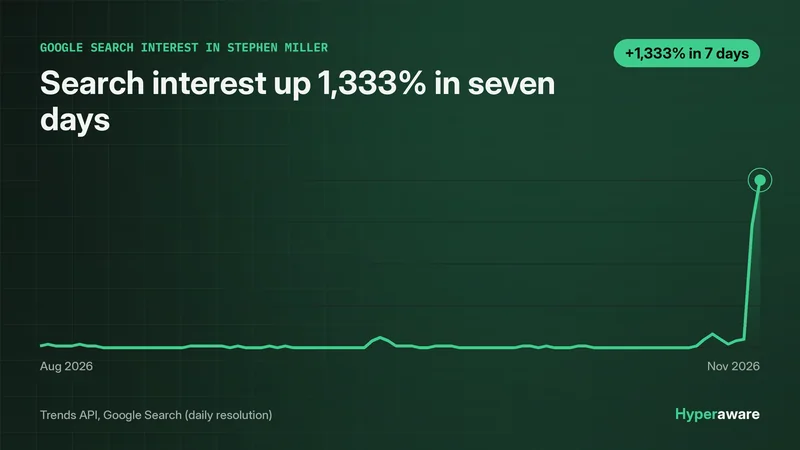
Google News Top News puts the BBC report at number 4, in a top ten where seven of the other nine stories are US politics, the aftermath this site tracked in its midterms explainer: the Stephen Miller promotion, the uncalled Mississippi Senate race, a Texas mayor limiting cooperation with ICE, a dismissed California ballots case, a California death penalty case, the arrest of a man who threatened Trump, and the Hegseth video. Reddit's World News board runs the story at 17, 19, and 25: the arrest, the impeachment, and the house arrest, each as its own item. The Reuters report on the new president's swearing in and Peña's house arrest runs across 20 outlets and 22 articles, and a second cluster, on the Senate vote itself, runs across 17 outlets and 20 articles.
The boards the public fills show none of it. Google Trends has not published a snapshot since 07:01 UTC on November 4, two days before the vote. Seventeen of its 25 rows are election races; the other eight cover a heritage month, a plane crash, a medical term, two news brands, a time query, sport, and the weather, with no Paraguay term among them. X's top 25 is dominated by college football, the NBA, and James Bond casting talk, with no Paraguay term. The search time series for "Santiago Peña" ends October 31, before the vote, so it holds no figure for the spike. This site's fastest-risers report found the same shape before: a story breaks, the news boards pick it up, and the boards driven by public search and posts take a day or more to follow. The pattern suggests the trigger was a bank failure that ended a presidency in three days.
A bank that served six in ten adults
Ueno Bank was a digital lender that launched in 2021 and grew fast, reaching about 2.9 million customers in a country of 6.1 million people, CNN reports, citing Paraguay's Central Bank. The Associated Press, via the Daily Caller puts it at roughly 60 percent of the country's adults. Many of the customers had never held a bank account before, Reuters reports. The bank also held as much as 850 million dollars in public money, according to the AP. It had received millions in funds from public entities, including the Social Security Institute, which manages the pensions of most of the country's workers, CNN reports.
Paraguay's Central Bank intervened in Ueno on Tuesday, November 3, after finding the bank's solvency ratio had fallen below 50 percent of the required minimum, CNN reports. The bank was shut down overnight due to a solvency crisis, CNN reports, leaving millions of customers unable to access their money. Paraguay's Central Bank said on Thursday night it would start processing guarantee payments to certain Ueno customers in stages, CNN reports. The deposit guarantee covers up to about 38,000 dollars per depositor, the AP reports, and preliminary Central Bank estimates put 97 percent of account holders fully within that ceiling.
Three days from intervention to impeachment
Peña announced his resignation on Thursday, after two days of long lines at banks, anxiety, and street protests, CNN reports, saying he wanted to give peace of mind to Paraguayans who had entrusted their savings to the financial system. Soon after he announced he would resign, the Chamber of Deputies voted to trigger impeachment proceedings, CNN reports. The vote was 78-0, NPR reports. The charges, brought by 35 opposition lawmakers and ruling-party dissidents, accused him of "serious and systematic dereliction of duty" in connection with his dealings with the bank, CNN reports. Until last year, Peña held shares in the company that owned the bank, the BBC, via Capital FM reports.
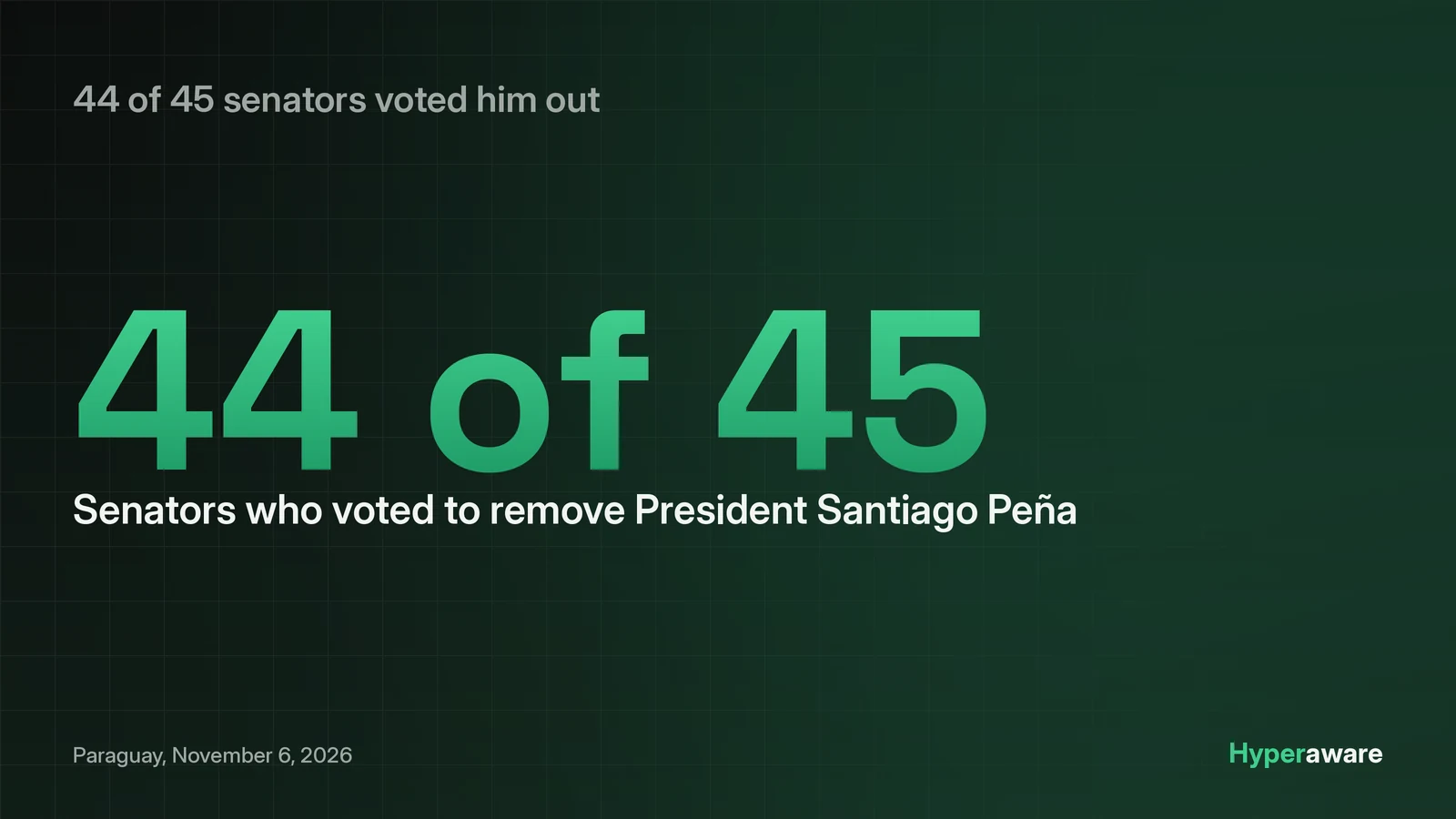
On Friday, the Senate voted 44-0 among the 45 members, one absent, to remove him from office, CNN reports. Police placed Peña under house arrest shortly after the vote, the BBC reports. Attorney General Emiliano Rolón Fernández has opened three criminal cases against Peña and other former officials related to the bank crisis, CNN reports. The arrest order cited suspected breach of trust and also covered Carlos Carvallo, the central bank chief Peña had installed, according to the AP. Prosecutors say the charges are still being determined but could include influence peddling, according to Reuters, via TBS News. Peña denies wrongdoing, the BBC reports. The impeachment vote removes him from office; it does not decide criminal guilt, which rests with the three criminal cases prosecutors have opened. He is the second Paraguayan president removed by impeachment since 1989, the AP reports.
The first court date comes Saturday morning
Peña was ordered to appear at the prosecutor's office on Saturday morning, November 7, Reuters reports, and a judge will decide where he stays while the criminal process runs, prosecutor Christian Benítez told CNN. Prosecutor Silvia Margarita Gonzalez Vester said he will be questioned over allegations including breach of trust, influence peddling, and misappropriation of funds, the BBC reports. Alliana will serve out the presidential term, which ends in August 2028, the AP reports. The next facts to land are the charges prosecutors file and whether the guarantee payments reach the customers whose accounts froze.